
Interactive modelling of the sustainable aviation goals at the House of Commons
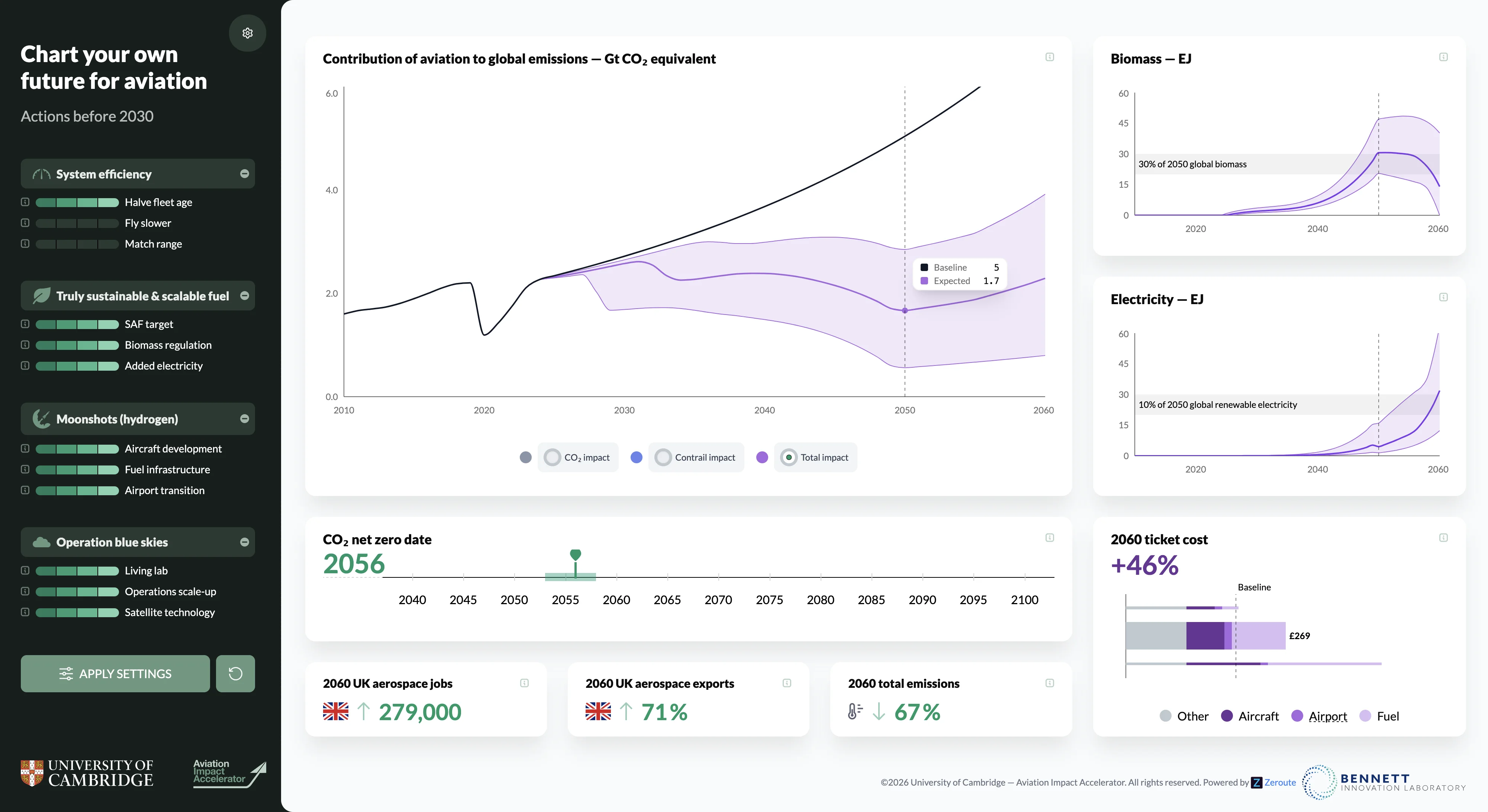
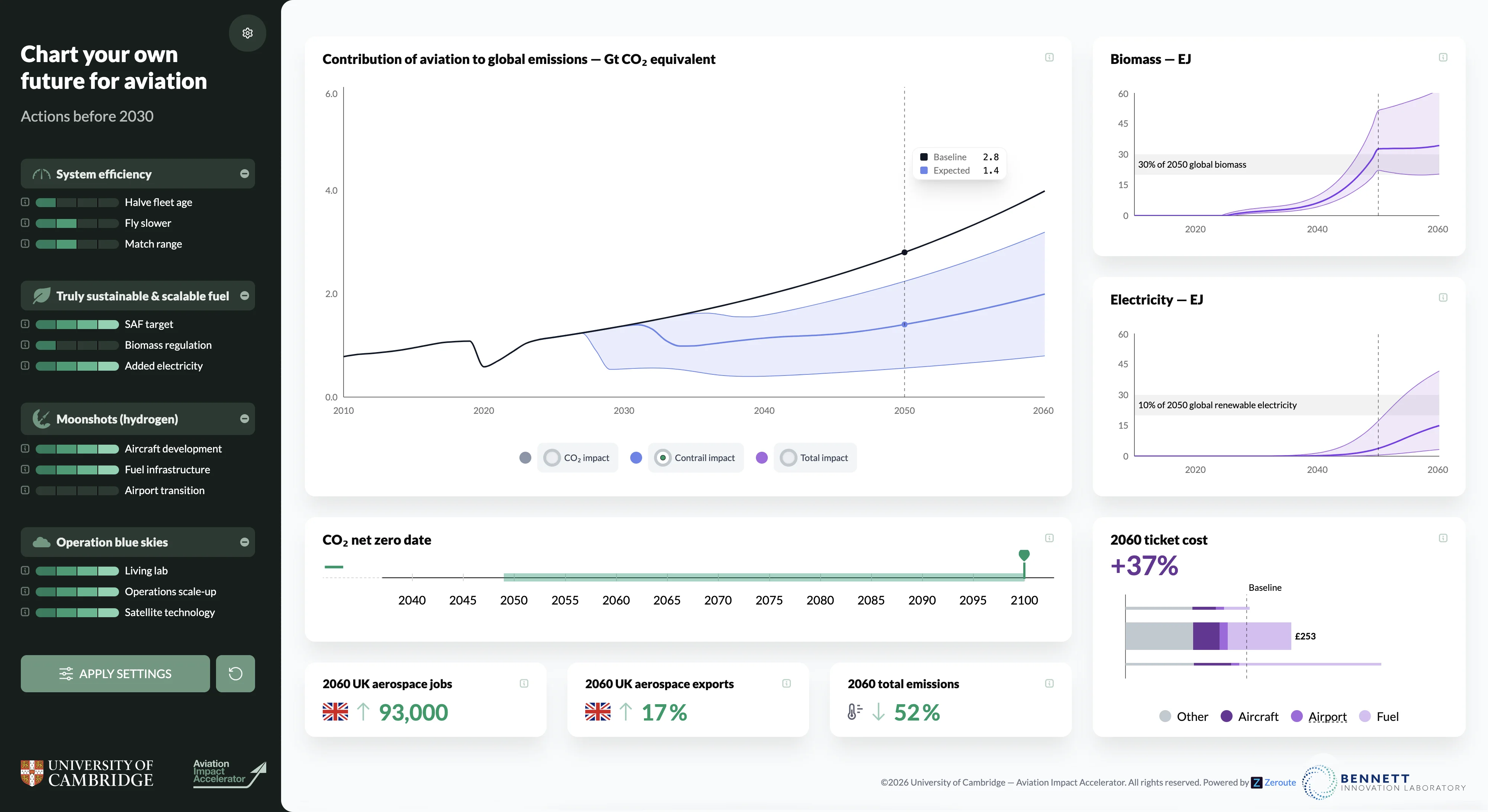
Levels of ambition across defined policy levers
Aviation Impact Accelerator
Aviation Impact Accelerator (AIA), led by the Whittle Laboratory and the University of Cambridge Institute for Sustainability Leadership (CISL), extended its 2030 Sustainable Aviation Goals into an interactive modelling platform presented at the UK House of Commons.
The 2030 Sustainable Aviation Goals outlined four priority areas required to place the sector on a credible path towards net-zero climate impact by 2050. These goals addressed systemic shifts in technology, fuels, infrastructure and policy coordination.
The task
Policymakers required a structured way to test how combinations of actions would influence measurable outcomes.
The platform required the functionality to adjust defined policy levers and immediately assess implications for global aviation emissions, UK aerospace jobs and exports, ticket cost and resource demand.
The modelling made one principle explicit. There is no single pathway to climate-neutral aviation. Different combinations of action produce different economic and environmental outcomes, yet all require decisive progress within the following five years.
Over several years, Twin Dots supported the Aviation Impact Accelerator with brand direction, system design and digital tools. Their creativity, attention to detail and consistently clear communication made them a trusted partner from strategy through to implementation.

Dr Samuel Gabra
Technical lead, University of Cambridge
The experience architecture
We devised the interaction architecture that enables the extended modelling framework to function as a usable policy instrument. This required defining how ambition levels could be adjusted independently, how outputs respond in real time, and how complex interdependencies are presented with clarity and fidelity to the underlying model.
We designed the user experience and visual system, translating technical modelling outputs into structured, decision-ready comparisons. The interface supported intuitive exploration for parliamentarians while maintaining analytical credibility for industry and academia.
The platform was developed in alignment with the visual identity framework of the University of Cambridge and extended the design language of the 2030 Sustainable Aviation Goals into a live digital environment. We collaborated closely on front-end implementation to ensure interaction behaviour accurately reflected the underlying model.
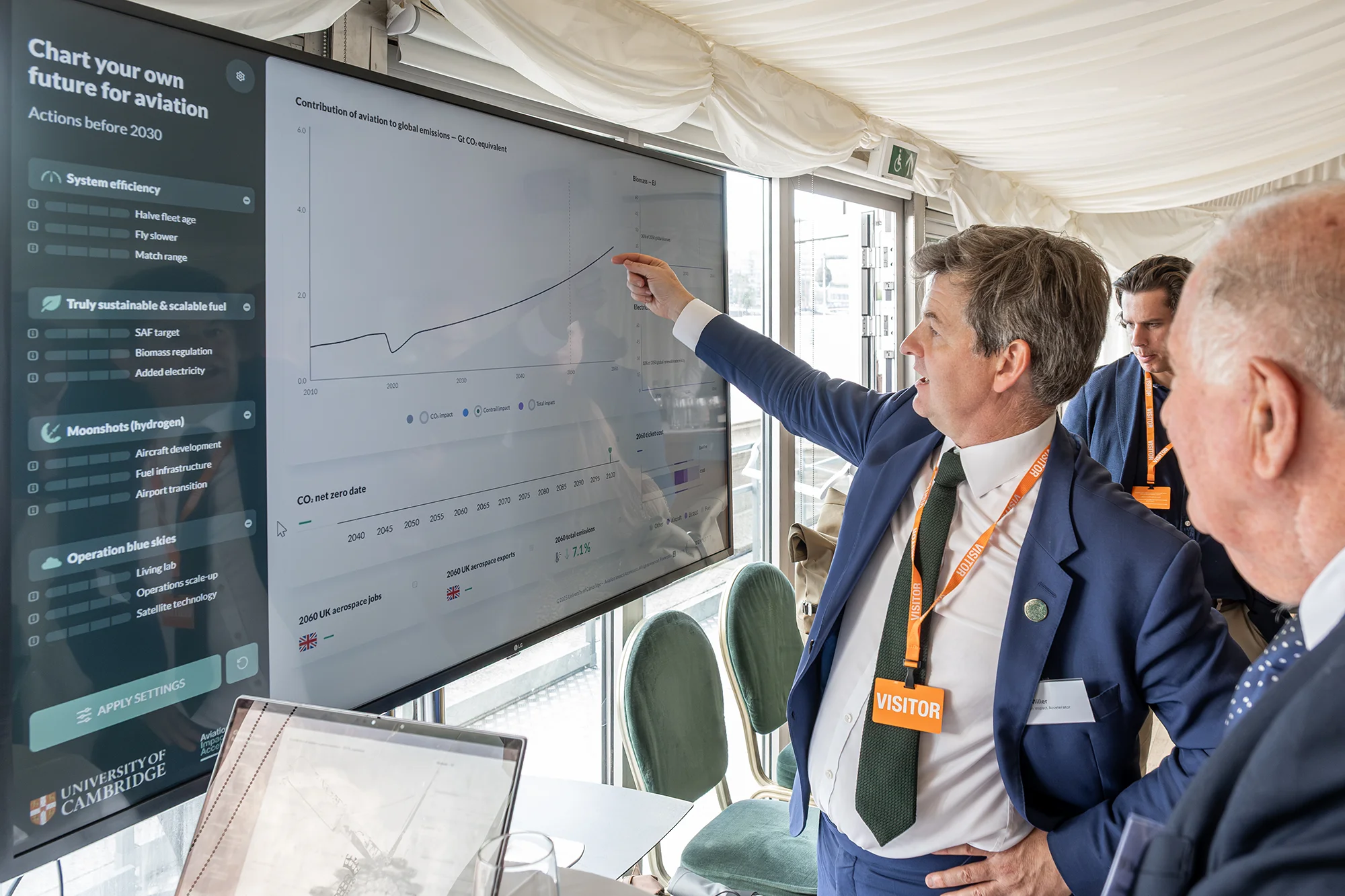
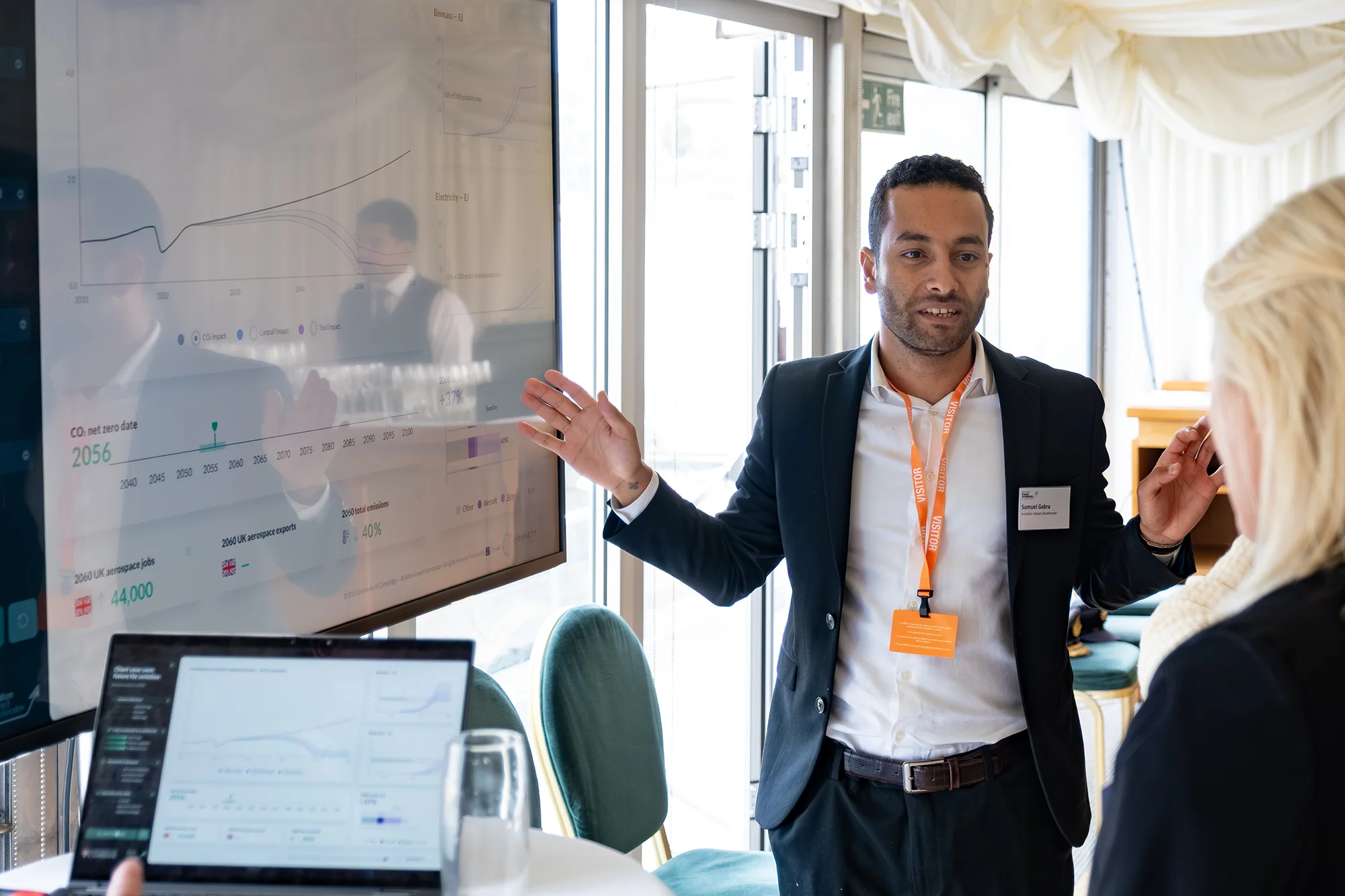
Enabling live modelling for parliamentary decision-making
The platform transformed the 2030 Sustainable Aviation Goals roadmap from a published framework into a live modelling tool capable of supporting structured policy discussion. It enabled decision-makers to move from abstract ambition to quantifiable economic and environmental outcomes.
By bringing the roadmap into active parliamentary dialogue, the tool converted strategic intent into measurable policy implications. It reflects our capacity to design interaction frameworks that make complex modelling usable in environments where precision and credibility are critical.